About Me

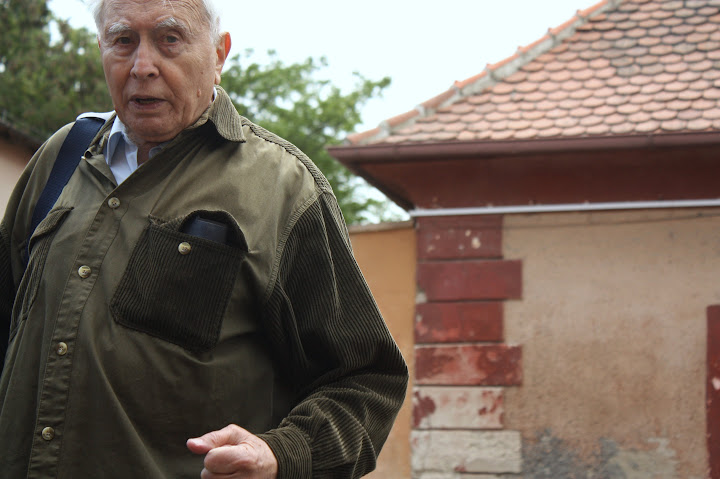
My photo
I walk, I look, I see, I stop, I photograph. -Leon Levinstein

Tuesday, June 7, 2011

Wish You Were Here

Revisiting Communism

Classmates Reading about the Stalin Statue Located in Letna Park

It is hard to believe that in 1989, the Czech Republic (when it was still Czechoslovakia) was still under communist rule. Yesterday, at the Communism Museum I had an intimate look at what these times were like, and how badly the communist regime functioned. I wrote about communism in the Czech Republic earlier but what I did not really think about until I came to the museum was how brave the Czechs were for fighting for their independence. On November 17, 1989 police suppressed a peaceful student protest, which sparked many other demonstrations until nearly December. Although the term Velvet Revolution is used to describe the events as non-violent and peaceful, from the videos that were shown in the museum this was not what I saw. Protestors were clubbed down by the police and badly beaten, and even women were assaulted. On November 27, nearly all Czechoslovaks participated in a two-hour strike and on the next day the Communist Party announced that it would relinquish all power.

This really made me think about how good overcomes evil, and that when people fight for their rights and come together, they succeed. It was interesting to see all the old artifacts such as statues of Stalin, propaganda posters, and to read about how at food shops, although people were given rations, people would still go back to trading goods and people who obtained more money would be able to sneak more items. It goes to show that even though communism looks good on paper, it has been proven not to function.

A replica of an interrogation room of the Communist Party

Monday, June 6, 2011

Weekend Miser

Flea Market

A little girl perusing the toys at the Flea Market

What better way to spend a lazy Sunday other than going to the local flea market? Yesterday me and some of my classmates went to one of Prague’s largest ones to see what deals we could get on unique items. Needless to say, everything here was dirt-cheap. There was an array of items sold here from antiques, to knives, to bottles of “Coffee Cola,” whatever that is. One item that stood out to me was a pin with a swastika on it. I don’t think you can get that kind of antique in the United States. This flea market is located right next to the metro (the subway) and is easy to get to.

I felt like I was transported to Trader’s Village, which is a flea market in Dallas, Texas when I got there. They both sell a lot of random stuff and feature unhealthy fried foods. Instead of a funnel cake, which I would usually get at Trader’s Village, Rachel, one of my classmates ordered a fried pancake-type thing, which tasted like eggs, sausage, and vegetables. We did not know what we were eating because everything here is in Czech since it is not a very touristy attraction. It can be very hard not knowing Czech sometimes because not being able to communicate with someone is very frustrating. I enjoyed coming here to see all the unique things they sold and go somewhere where only locals seem to go.

Artwork on Display at the Flea Market

Saturday, June 4, 2011

Morning Glory

Trekking the King's Parade

The King's Parade 2011

Arriving at the Prague Castle after journeying on two trams early Saturday morning, people in medieval costumes started to appear under the bright blue sky next to St. Vitus Cathedral. It was the beginning of the King’s Parade, which commemorates King Charles IV and begins at the Prague Castle and ends at Karlštejn Castle, making it a total of eighteen miles. Luckily we only stayed at the parade for a few hours and it was enough time to enjoy the royal costumes and watch the jester do various silly things.

The history of the parade dates back to the Holy Roman Empire when the emperor would take the coronation jewels from Karlštejn Castle to put them on display at St. Vitus Cathedral after Easter. This parade celebrates the return of the crown to Karlštejn. There are many other activities that take place after the parade such as knight fights, concerts, and theater. People can participate with or without costumes. I think it would be fun to dress up as a medieval character just to feel like I am in olden times because it’s always fun to pretend. I really liked how the people who wore the costumes really played their roles well, such as the guards yelling and the royal way the King carried on. It almost felt like I was transferred to medieval times, if it wasn’t for the cars and the crowds of people.

http://www.kralovskypruvod.eu/?go=program&la=en#h2

Small Wonder

Off the Beaten Path

Bullet-holes and the Flood-line

Out of destruction sometimes good can be created, and this is evidenced by a small neighborhood in Prague. During a walking tour around the outskirts of Prague, we came across a neighborhood that in 2002 was devastated by floods, but built itself up to become a beautiful place to live in. Our tour guide, David, who is a Prague native, told us that the buildings before the flood were neglected and shabby, but after the floods, the community brought itself together and rebuilt. Parks were created and facades of decrepit buildings were renovated to make them look like new. This area is very peaceful and according to our tour guide is an affluent part of town. It used to be a small town but was later added to Prague. I was surprised to know that until the 20th century Prague was not a city, but five small towns comprised of what is today one whole city.

During our tour we also came across a neighborhood of apartments, or flats as they say here, that were built during the time of communism. They were built in a functionalist style, meaning that they are built to suit function over form. All of these buildings looked alike and are very characteristic of communist style all over Eastern Europe. As our tour guide said they were like “cages for rabbits.” Today the area is unsightly and houses people in the lower and lower-middle class. It would not be an ideal place to live in my opinion, but at the end of the day all that matters is how people make their house a home. The people here seemed happy, kids played on the street, and owners gleefully walked their dogs or took a stroll around the block. I think that’s the main difference between here and the United States, people seem to value their time more and enjoy the little things. I think that that’s very important for me to remember when I go back home.

Friday, June 3, 2011

Noticed

Street Art

It seems like every corner I turn on I see graffiti written on the walls. Sure, I see some of it in the United States, but in Prague, street art never seems to be washed away. Most of it is pretty horrible, as if children scribbled on the walls with spray paint, but every now and then I see something that really catches my eye. Recently, street art has become very popular with movies such as “Exit Through the Gift Shop” which is a documentary about street art and the famous Banksy. It seems as if street art is really becoming an acceptable form of art.

I for one like street art because it brings some color to the street. Seeing buildings that all look the same sometimes gets repetitive, but having a character or a statement written on it and making it look good adds some character to the neighborhood. There are many famous Czech street artists such as Pasta, Cryptic 257, Tron, and Skarf. These artists are professionally trained and have been featured in exhibits. They don’t just see their work as graffiti as Skarf explains, “street art is a less assaultable. Street artists often touch on social themes and that’s not like graffiti. The establishment cannot tell the street artist that he is ruining the street.”

Thursday, June 2, 2011

Wish You Were Here

Visiting Terezin


Felix, our guide and a Holocaust survivor shows us around Terezin
Jewish Cemetery, putting rocks on a grave is a Jewish tradition

The cold dreary morning seemed to foretell how I was going to feel during our class trip to Terezin. Terezin is a town, but more importantly a former concentration camp and a Jewish ghetto, located about an hour away from Prague. The town had two fortresses that were constructed in the late 18th century and were designed to be a military fort, but this plan was never realized. Instead it was used to hold political prisoners. In the 1940s, Hitler’s regime used the smaller fortress of the two to house prisoners, and the larger fortress as a large Jewish ghetto. The ghetto housed nearly 150,000 Jewish people who lived in dire crammed conditions and was used as a transport to Auschwitz, where many met their fate of death. 35,000 people died in this town due to unsanitary conditions and starvation, and there were only about 18,000 survivors.

Our tour guide, Dr. Felix Kolmer was one of those survivors. Dr. Kolmer is a remarkable person as he survived both Terezin and Auschwitz, and today he is a professor in physics at Charles University. He led us through the prison and told us the horrific acts and would describe the dire conditions. Although he had endured all of this, Dr. Kolmer spoke to us in an unemotional descriptive way. It was amazing to me that after going through so much he could be able to tell his story and share it with us. During the tour I was so touched that is impossible to even describe it in words. All the inhumanity and suffering suddenly became very real to me.

The thing that struck me about the Jewish people who were living in Terezin was their ability to be creative through the harsh conditions. We visited a museum that displayed their artwork that vividly described how they felt. You could see the despair and feelings of futility and darkness through their drawings and poems. This artwork of course had to be hidden and was found after the end of the war, as Nazi propaganda portrayed Terezin as an ideal Jewish settlement. Today, Terezin is nearly a ghost town, and I don't blame anyone for not wanting to live here, as it's history makes it a very sad place. This day was very heavy for me and emotionally draining, but it is important to remember the pain that the Holocaust caused and the countless lives it destroyed.

Wednesday, June 1, 2011

Angels in the Architecture (Literally)

Prague's Rich History Told Through Buildings

One of the Angel Statues at Loretta

One of the pleasures of getting to live in Prague for a month is being able to see beautiful buildings that are centuries old. In Texas, the oldest building I probably have seen is from the 18th century, while in Prague some of the oldest buildings date back to the 9th century. Some of my favorite buildings here have to be the churches. There is just something about them that make them so majestic and wonderful to look at. One of my favorite churches is the St. Vitus Cathedral. It is a gothic style and is the spiritual symbol of Czech state. The church was founded in the 9th century, and its final construction ended in the 19th century, making it about a thousand-year process. The cathedral is beautiful, and is especially made so by its flying buttresses and because of its intricate details. During an architectural walking tour, we came across this small church that is in the picture called Loretta. The details, such as the gold trimming against the cream colored building and the statues made it much more beautiful compared to the monstrous palace that was in front of it. In Old Town Square one of the main attractions besides the astronomical clock is the Tyn Church. This church is in Gothic style and its two tall towers have four spires, which make this church really beautiful and unique. Prague has so much to offer architecturally, and one thing that is truly remarkable are it’s churches.

About This Blog:

I am a student at the University of Texan at Austin studying abroad and am documenting life in Prague, Czech Republic through photography. Each day I blog about one of the nine assigned categories Morning Glory, Weekend Miser, The Nocturnalist, Wish You Were Here, Small Wonder, Noticed, Around Here, Facts of Life, and Angels in the Architecture. I hope to learn about another culture and learn important lessons in photography with this experience.

Followers